
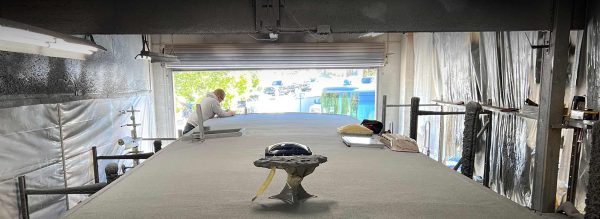
When an RV roof starts showing problems, the decision between repair and replacement is the one that costs owners the most money when they get it wrong. San Diego RV Center has handled both sides of this question in El Cajon since 1990, and the answer is rarely obvious from the parking lot. RV roof repair vs replacement comes down to three factors: how much of the surface is affected, how far moisture has penetrated the structure beneath, and what the current roof material can still support. This guide makes the call clear.
When Roof Repair Is the Right Answer
Repair makes sense when the damage is isolated and the rest of the roof is structurally sound. A cracked seam around an AC unit, a soft spot in one corner, a failed vent boot — these are repair jobs, not replacement triggers. The key indicator is decking integrity: if the wood substrate under the membrane is dry and firm across the rest of the surface, a targeted repair holds and gives you several more good years. One solid inspection per year keeps most owners in repair territory.
Warning Signs You Need a Full Roof Replacement
Some conditions make repair the wrong call no matter how contained the damage looks from the outside. Watch for these:
- Widespread soft spots: Multiple spongy areas in the decking mean moisture has penetrated broadly. Surface patches do not fix rotted structure underneath.
- Interior water stains in multiple locations: Staining in more than one area of the ceiling or walls suggests the membrane has failed across a large section.
- Visible delamination: Bubbling or layer separation across the roof signals widespread adhesive failure. Our guide on RV roof delamination repair in San Diego explains what this looks like and what fixes it.
- Membrane crazing: Fine cracks spread across a large area mean the membrane’s useful life has ended. Patching individual cracks in a crazed surface is temporary at best.
- Age beyond 20 years without prior replacement: Most RV roof membranes last 15–20 years with proper maintenance. An original roof on a 1999 rig has earned a replacement by now.
The 25 Percent Rule — A Simple Way to Decide
Here is the threshold most experienced technicians apply: if more than 25 percent of your roof surface is compromised — by soft spots, membrane failure, or active delamination — full replacement is almost always the better financial call. Below that mark, well-executed repairs buy you years. Above it, you are buying time that the underlying deterioration will eventually reclaim. This is not an absolute rule, but it holds up consistently across roof types and rig sizes. A probe test during an inspection confirms the real number.
How Your Roof Material Affects the Decision
EPDM rubber roofs are highly repairable in their early and middle years — patches bond well and the material is forgiving. Once the membrane starts to crack and harden with age, spot repairs lose their reliability. TPO behaves similarly but tends to resist UV degradation longer before reaching that point. Fiberglass is the most durable but the most expensive to replace when the time comes. For a detailed breakdown of how repair methods differ by material type, see our article on RV roof repair for every material.
Not sure which material your rig has or how much life is left in it? Get a free inspection at San Diego RV Center — we tell you exactly what you are working with before recommending anything.
What Happens When You Repair a Roof That Should Be Replaced
This is the scenario that costs owners the most money over time. A patch on degraded substrate holds for one season — sometimes less — then the problem returns, usually larger. The second repair costs more than the first because the damage has spread. By the third round, owners are looking at the same full replacement they needed originally, plus $2,000–$4,000 in repairs that solved nothing. Our technicians in El Cajon see this pattern regularly. When the roof tells you it needs replacement, doing it once correctly is cheaper than fighting it in rounds.
What Interior Damage Tells You About the Right Decision
A single water stain in one location suggests an isolated leak at a specific penetration — that is a repair. Stains in multiple locations, or staining combined with soft walls or a persistent musty smell, suggest widespread moisture infiltration that points toward replacement. When interior substrate has absorbed significant moisture, decking work alone can cost nearly as much as a full roof job. At San Diego RV Center, we inspect the interior alongside the exterior on every roof evaluation. Our complete range of RV repair services covers everything from roof to running gear.
What to Expect From a Professional RV Roof Inspection
A proper inspection is not a glance from the ground. Our technicians get on the roof and walk it methodically — pressing seams, checking every penetration point, probing the decking for moisture and soft spots, and documenting findings with photos. Depending on rig size, the evaluation takes 20–45 minutes. You receive a clear recommendation — repair or replacement — with a written estimate covering scope, materials, and timeline. San Diego RV Center offers this inspection free of charge because the right diagnosis saves everyone time and money. A straight answer upfront has been our standard since 1990.
Frequently Asked Questions: RV Roof Repair vs. Replacement
How do I know if my RV needs roof repair or full replacement?
If the damage is isolated, the decking is dry and firm elsewhere, and less than 25% of the surface is affected, repair is almost certainly the right call. Multiple soft spots, widespread membrane cracking, or interior stains in several locations point toward replacement. A physical probe inspection removes all guesswork — never rely on a phone estimate for this decision.
Can I replace just one section of my RV roof?
Yes — a partial section replacement is a legitimate strategy when the remaining membrane and decking are genuinely sound. The risk is misdiagnosing how far the damage has spread. A full-surface probe test before any work confirms whether the partial approach makes sense or whether the problem runs deeper than it looks.
How long does a full RV roof replacement take?
At San Diego RV Center, a full replacement on a mid-size Class C or travel trailer takes 3–5 business days. A large Class A with multiple roof fixtures — two AC units, skylights, antenna systems — can run 5–7 days. Material availability is the most common variable; specialty membranes are not always in local stock.
Does RV insurance cover full roof replacement in California?
If the replacement results from sudden accidental damage — storm, hail, a falling object — most comprehensive RV policies cover it minus the deductible. Wear-related replacements caused by long-term neglect are generally excluded. Document roof condition with dated photos before and after any weather event, and call your carrier before authorizing replacement work.
Ready to Get Started?
If you are weighing repair against replacement and want a straight answer from people who have been doing this work since 1990, start with a free on-site roof inspection at our El Cajon shop.
Get a Free Quote or call us at (619) 561-3531.