
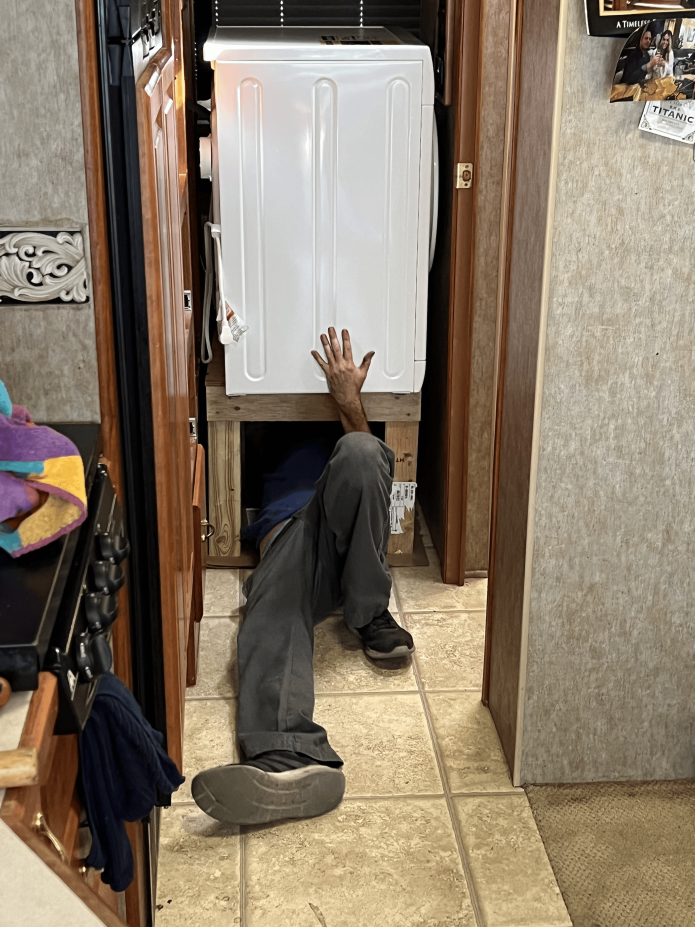
Installing new appliances in an RV or motorhome requires specialized knowledge that differs significantly from residential installation work. RVs operate on unique electrical systems, often combining 12-volt DC and 120-volt AC power, and many appliances run on propane. Improper installation can lead to electrical failures, gas leaks, or damage to your RV’s infrastructure.
San Diego RV Center provides professional appliance installation for motorhomes, travel trailers, and fifth wheels throughout San Diego County. Our technicians understand the specific requirements of RV refrigerators, stoves, microwaves, washers, dryers, and other appliances. We handle the electrical connections, propane hookups, ventilation requirements, and mounting specifications that each appliance demands.
Whether you’re upgrading an outdated refrigerator or adding a washer-dryer combo to your rig, professional installation protects your investment and ensures your appliances function safely on the road.
Why RV Appliances Differ From Residential Units
RV appliances are engineered for mobile environments. They must withstand road vibration, operate efficiently on limited power, and fit into compact spaces with specific ventilation requirements.
Power System Compatibility
Most RV refrigerators are absorption-style units that run on propane, 12-volt DC, or 120-volt AC power. Residential refrigerators only use standard household current. Installing the wrong type of appliance—or installing the right appliance incorrectly—can drain your batteries, trip breakers, or create fire hazards.
Weight and Space Constraints
Every pound matters in an RV. Appliances designed for motorhomes are built lighter and sized to fit standard RV cabinet openings. Residential appliances may exceed your RV’s weight capacity or require modifications to fit properly.
Common RV Appliances We Install
Our installation services cover the full range of appliances found in modern RVs and motorhomes:
- Refrigerators (absorption, compressor, and residential-style units)
- Ranges and cooktops (propane and electric)
- Microwave ovens and convection microwave combos
- Washer-dryer combos and stackable units
- Dishwashers
- Ice makers
- Tankless water heaters
Each appliance type has specific installation requirements for power connections, ventilation, and mounting hardware.
The Installation Process
Professional RV appliance installation follows a systematic approach that addresses safety, functionality, and longevity.
Assessment and Measurement
Before any installation begins, we evaluate your RV’s existing infrastructure. This includes measuring the installation space, checking electrical capacity, inspecting propane lines if applicable, and verifying that your chosen appliance will fit and function in your specific RV model.
Removal of Old Equipment
Removing an old appliance involves more than pulling it out of the cabinet. We disconnect electrical wiring, cap or disconnect gas lines safely, and inspect the installation area for any water damage, wiring issues, or structural concerns that need attention before the new unit goes in.
New Appliance Installation
The new appliance is secured using manufacturer-specified mounting hardware designed to handle road vibration. We complete all electrical connections according to code, test propane fittings for leaks, verify proper ventilation, and calibrate the appliance for optimal performance.
Testing and Verification
After installation, we run the appliance through multiple cycles to confirm proper operation. For refrigerators, this means verifying cooling performance on all power sources. For ranges, we test each burner and the oven. Every installation includes a thorough safety check.
Electrical Considerations for RV Appliances
RV electrical systems have limitations that homeowners rarely consider. Understanding these constraints helps you choose appliances that work well in your rig.
Shore Power vs. Battery Operation
When connected to shore power at an RV park, you have access to 30 or 50 amps depending on your RV’s setup. Running multiple high-draw appliances simultaneously can trip breakers or damage your electrical system. We help you understand your power budget and install appliances that match your RV’s capacity.
Inverter Requirements
Running appliances while boondocking requires an inverter to convert battery power to AC current. Not all inverters can handle the startup surge of appliances like microwaves or air conditioners. We assess your inverter capacity and recommend upgrades when necessary.
Signs Your RV Appliances Need Replacement
Knowing when to replace rather than repair saves money and prevents breakdowns during trips. Watch for these indicators:
- Refrigerator fails to maintain consistent temperature
- Yellow or orange flames on propane burners instead of blue
- Unusual noises during operation
- Increased propane consumption
- Visible rust or corrosion on components
- Appliance cycles on and off frequently
- Error codes appearing repeatedly
Older appliances also lack the energy efficiency of newer models, which matters when you’re relying on batteries or paying for propane.
Upgrading vs. Direct Replacement
When replacing an appliance, you have two options: install the same type of unit or upgrade to something with more features or better efficiency.
Direct Replacement Benefits
Replacing with an identical or similar model simplifies installation. The mounting points, electrical connections, and ventilation typically align with existing infrastructure, reducing labor time and cost.
Upgrade Considerations
Upgrading—such as switching from an absorption refrigerator to a compressor model—often delivers better cooling performance and energy efficiency. However, upgrades may require electrical system modifications, new ventilation routing, or cabinet alterations. We provide honest assessments of what upgrades involve before you commit.
Protect Your Investment With Professional Installation
DIY appliance installation in an RV carries risks that don’t exist in residential settings. Incorrect gas connections can cause carbon monoxide poisoning. Improper electrical work can start fires or damage your RV’s wiring harness. Even something as simple as inadequate mounting can send an appliance flying during a sudden stop.
Professional installation from San Diego RV Center ensures your appliances work safely and reliably wherever your travels take you. Contact us to schedule your appliance installation or discuss upgrade options for your motorhome.